

It’s Saturday morning, 10:00 a.m. sharp. Ticket sales for the new season at De Kleine Komedie—Amsterdam’s oldest theatre—are about to go live, and anticipation is high. For weeks, social media has been buzzing. Thousands of fans are poised at their screens, fingers hovering over the refresh button, determined to claim a seat for their favourite comedians and artists.
But instead of crashing websites and overloaded phone lines, the atmosphere inside De Kleine Komedie’s office is remarkably calm.
The reason? Time slots, an innovation born from a collaboration between De Kleine Komedie and CultureSuite in 2022. It not only reshapes how online ticket sales work, but also demonstrates how collaboration can lead to fairer and more inclusive access to culture.
I spoke to Loes Hartog, Marketing Manager of De Kleine Komedie and Coen van der Poll, CEO of CultureSuite, about how this solution reaches far beyond technology. It reflects a sector in transition: moving away from copying physical processes into digital environments, and towards consciously digital systems that align with the values of our sector.
From sleeping bags to three different queues
Time slots only make sense when you understand how ticket sales used to work. Before the internet, everything was simple: you went to the box office, called the theatre, or literally camped out overnight with a sleeping bag to get tickets.
Many people still remember spending the night outside a theatre. The atmosphere in those queues was unique: strangers waited together, talked, and briefly formed a small community.
That system felt fair. You could see exactly who was ahead of you; everyone followed the same rules, and anyone willing to wake up early enough earned their spot.
When the internet arrived, the solution seemed obvious: move this first-come-first-serve queueing system online. But that shift created unexpected problems.
“We’ve watched this happen at many theatres,” Coen explains. “Where people used to buy tickets calmly at the box office, phone lines now suddenly started overheating.”
The change unfolded gradually. Theatres suddenly had to manage the box office and phone lines simultaneously. Who do you prioritise when everything comes in at once? When websites entered the picture, one clear queue became three parallel ones: box office, phone and online sales. Each channel demanded full attention, making the work behind the scenes increasingly complex.
What works offline breaks online
Online ticketing appears fair at first glance: everyone can buy at the same time, so everyone should have the same chance, right?
The reality is quite different. This reveals a common digital pitfall: assuming you can copy a physical process directly into an online environment. With digital queues, professional resellers gain a huge advantage with automated tools and high-speed connections, buying in bulk and reselling at a profit. What works offline quickly becomes exclusionary online – with technical players outcompeting passionate theatre audiences.
It raises an uncomfortable question: how inclusive is online ticketing?
De Kleine Komedie: The theatre that challenged the system
At De Kleine Komedie – one of the longest-standing members of the CultureSuite community – the same pattern became clear. The theatre is purposefully inclusive, entrepreneurial and independent, with a broad and often progressive audience.
Yet as digital ticketing evolved, it grew too labour-intensive for the small team. Each onsales period meant immense pressure, frustrated customers, and technical issues. It simply wasn't sustainable.
Coen explains: “Peak sales are essentially organised crises. You consolidate everything into a single moment to save time, but you end up creating stress. Visitors are angry, social media explodes, and you miss commercial opportunities because no one has the space to browse.”
Loes puts it bluntly: “Sometimes it felt like all we did was customer service. But our work is much broader: programming, communication, social media, promotion in the city.”
For Loes, there was a deeper tension: “How do you build connection if your ticketing process shuts people out? On stage, we embrace diverse perspectives, yet our digital ticketing was doing the opposite."
Time slots: A new digital logic
The breakthrough came when the CultureSuite team and De Kleine Komedie sat down together and realised the issue wasn't technical. It was fundamental.
What's the benefit of tickets selling out in one minute? All it creates is stress. Visitors rush through the process and skip add-ons, even though there's no need to.
The answer wasn’t faster servers or more hardware, but a new logic that aligns digital behaviour with cultural values.
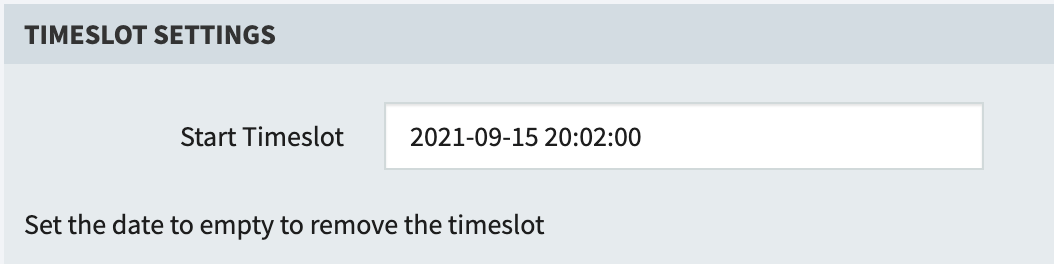
That's where Time slots comes in. Instead of letting everyone in at once, visitors receive a personal time slot by email, giving them a dedicated login window to purchase their tickets calmly. This spreads and organises the pressure of an onsale period across several hours or even days.
A fairer and more inclusive ticket process
For Loes, the difference was immediate. “The stress disappeared, for us and for the audience. Honestly, onsales has almost become boring,” she jokes. What previously consumed entire days – phone calls, troubleshooting – now leaves room for the work that truly matters: sharing culture.
Time slots resolve several issues at once. The website remains stable because thousands of users aren’t entering at the same second and staff can offer personal assistance instead of constantly firefighting.
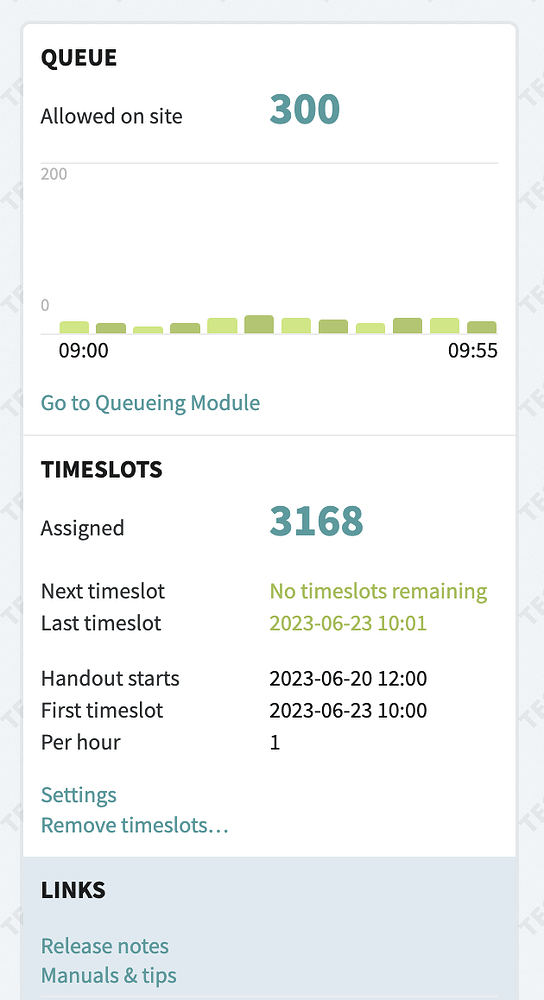
Visitors also experience more clarity and peace. The result is genuinely equitable access – something the previous system, for all its "first-come-first-served" logic, never delivered. And when problems occur, the team can help far more people throughout the day, because the crowd is no longer concentrated in a single minute.
Loes also sees significant communication and marketing advantages. “Our website has really become the central hub for ticketing as well as storytelling.”
The pre-registration process generates valuable data insights, enabling Loes’ team to target audiences more precisely when new programmes align with their interests.
And for artists who love to boast they “sold out in one second”? That claim still stands. With Time slots, you’ve effectively sold out before sales even start because people register their interest in advance.
The future: Building more inclusive solutions together
This story shows what becomes possible when technology, collaboration and audience thinking come together. Time slots are more than a technical feature; they represent a shift in thinking. One where everyone gets an equal opportunity, regardless of internet speed or digital skill.
As the cultural sector becomes increasingly digital, it’s no longer enough to simply copy physical models for online channels. We need intentionally designed processes that support accessibility and inclusion. Time slots demonstrate that technology can do more than solve problems, it can express values: fairness, openness, and the shared experience of culture.
Let’s get this show on the road
No matter what stage you're at in your search for the perfect web platform or digital marketing tool for your venue, we'll help you get the information you need.
- Want to see how CultureSuite CMS works?
We’re proud of how easy we make it for venues to manage their website. That’s why live event venues around the world trust CultureSuite. Book a personalised demo. - Looking to partner with us?
If you’re a technology provider, design agency or supplier for the arts and culture sector, we’d love to hear from you. Contact us here. - Want to learn more about digital tools for venues?
Explore our industry insights and expert advice by heading over to our articles, events and webinars, Spotify, YouTube channel or subscribing to our newsletter.


