

For many theatres and cultural centres, school bookings still sit outside the normal digital journey.
Regular visitors can browse performances, select tickets and complete their booking online. But when a school wants to book for a class, the process is often still handled by phone or email. That creates unnecessary manual work for internal teams and a slower, less convenient experience for teachers.
At the same time, many organisations hesitate to put school booking journeys fully online. If school-specific booking links are made openly available, they can attract enquiries or bookings from the wrong audiences. If they are kept offline, staff have to manage the process manually instead.
CultureSuite solves this with dedicated school booking journeys that are visible only to the right audience.
Why school bookings are often still manual
In many organisations, school bookings do not fit neatly into the standard public booking path.
Sometimes a performance is suitable for schools, but school groups need a different route, with different terms, different information, or a more controlled booking process.
In other cases, theatres create dedicated school performances that are intended specifically for classes and educational groups. In those situations, the organisation may not want the general public to see or access those booking options at all.
Without a way to manage that distinction on the website, teams often fall back on the same model: ask schools to call, email, or submit an enquiry form, and let staff handle the process manually.
That protects access, but it also creates admin overhead and makes the website less useful as a booking tool.
A more effective digital journey for school bookers
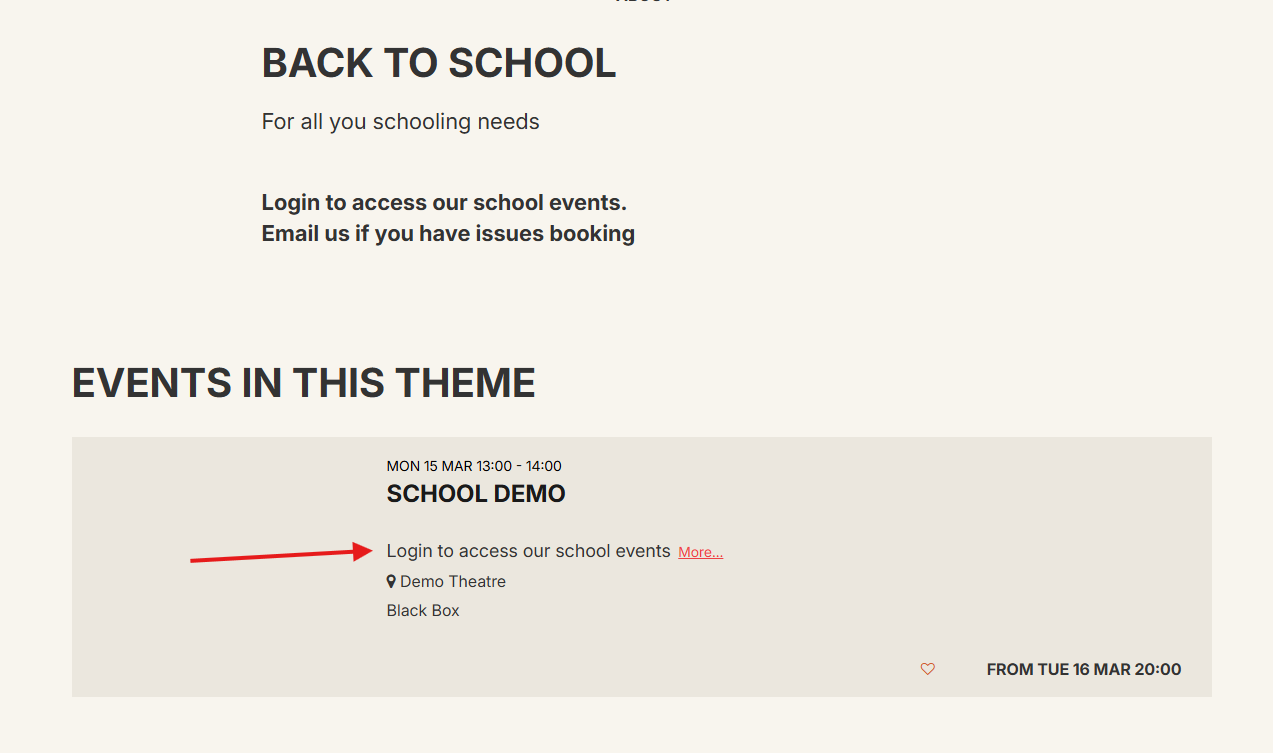
With CultureSuite, organisations can create a dedicated “For Schools” page that adapts based on who the visitor is.
If the visitor is already recognised as a school booker, they can be shown the relevant event listings, school-only performances, booking links and practical information directly.
If the visitor is not yet recognised, they can be shown a different path instead, such as:
- Information about school access
- A contact option
- A sign-up or approval flow
This allows the organisation to keep control over access, while still creating a much smoother digital journey.
Instead of choosing between open access and manual handling, teams can offer a more structured experience:
- Approved school bookers can self-serve
- New school contacts can register once
- The organisation controls who sees school-specific booking options
Designed for the way school performances actually work
This setup is especially useful because it supports the two most common school booking scenarios.
For standard performances that are also relevant to schools, recognised school bookers can access the correct booking route without needing to start a manual email exchange.
For dedicated school performances, organisations can ensure that those showings are only visible to approved school bookers, rather than being exposed to the general public.
In both cases, the website becomes more than a static information page. It becomes an active operational tool that supports the booking process directly.
Better for schools, better for internal teams
The benefit is not only reduced admin – although that is often significant.
It also creates a better experience for teachers and school administrators. Many of them handle planning outside normal office hours, so the ability to access relevant information and take the next step digitally makes the process much easier.
That convenience matters. A smoother school booking journey can help make an organisation a preferred choice for schools planning cultural visits.
Internally, the benefits go further:
- fewer repetitive enquiries
- less manual triage
- a clearer process for school access
- a more scalable way to manage repeat bookings
Stronger data, better follow-up, more targeted communication
Because school bookers can be tagged in the CMS or ticketing setup, the organisation also gains a much stronger foundation for future communication.
Once a contact has been identified as a school booker, that status can be used not only to shape website access, but also to support more relevant outreach. Marketing teams can create dedicated school newsletters, promote new school performances more effectively, and build ongoing relationships with teachers over time.
In short: it supports both operations and audience development, not one at the expense of the other.
Turn school bookings into a structured digital journey
School bookings are too important to be left outside the website experience.
With CultureSuite, theatres and cultural centres can create dedicated school booking journeys that protect access, reduce manual handling, and make life easier for both staff and schools.
The result is a more controlled process, a better user experience, and a stronger foundation for long-term engagement with education audiences.
Class dismissed
If this article got you thinking about how your venue handles school bookings, the next step is easy.
- Want to see more?
Book a personalised demo to see how CultureSuite handles school booking journeys in practice. - Keep exploring
Dive into more thinking on digital strategy through our articles, events and webinars, Spotify, YouTube channel or our newsletter.


