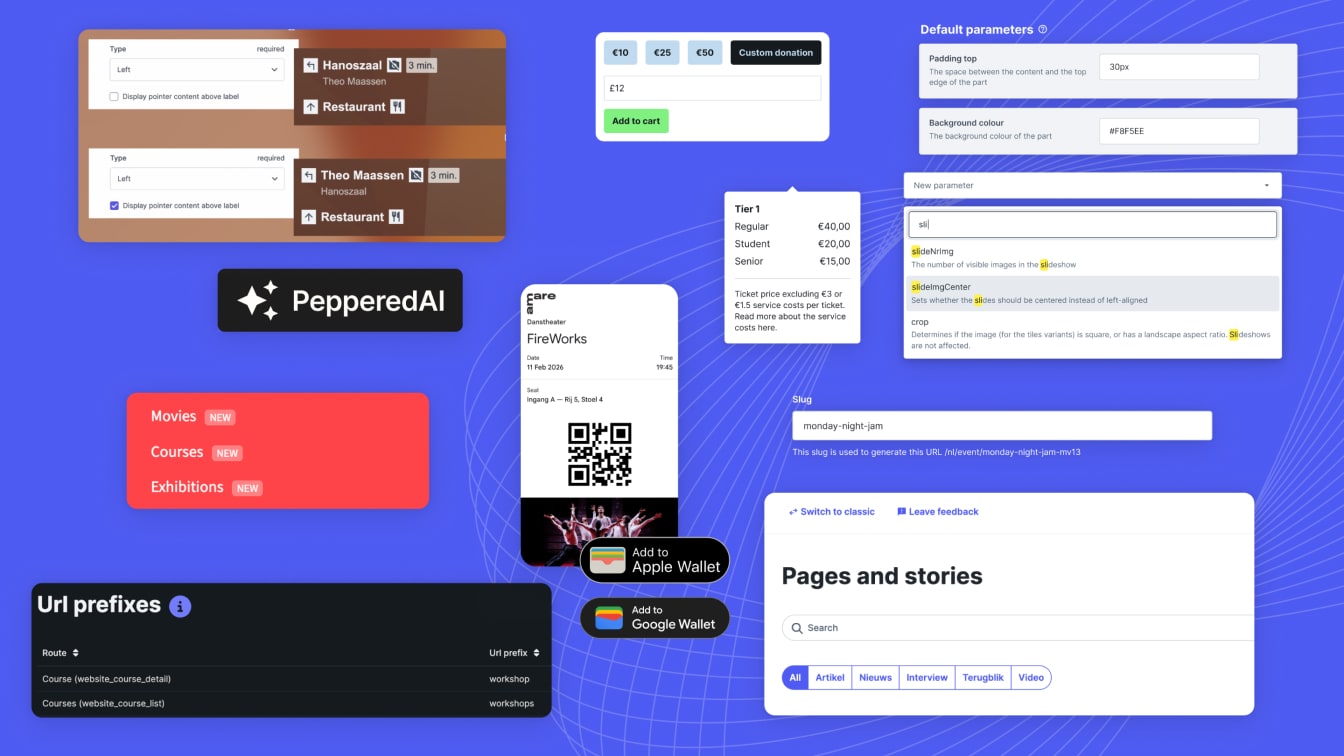
Arts organisations are masters of the back office. We invest heavily in the holy trinity of strategic infrastructure: ticketing, CRM and marketing automation. These systems are treated as the brain of the operation: data-driven, integrated, essential. We constantly tweak them, update them and invest in them.
And yet, sitting right at the centre of this sophisticated ecosystem, is a gaping hole.
The website.
We don't treat the website as infrastructure. We treat it as a project. We spend months debating hex codes and font weights, then "launch" it and let it sit, frozen in time, until the next redesign cycle three years later. While the CRM is busy learning who our audiences are, the website is busy pretending it has never met them.
Think about your best donor. They've attended every opening night for a decade. Your CRM knows their name, their seat preferences, the genres they care about. But when that donor lands on your homepage, what do they see? The exact same "Introduction to the Season" page as a first-time visitor who doesn't know where the car park is.
This is a missed opportunity. Most organisations have mapped out the desired customer loyalty journey, which is reflected in communications and offerings. But the website, the place where your audience comes to find relevant information, drops the ball.
Identity changes everything
Single Sign-On has quietly changed the game. Many organisations now have the technical ability to recognise a visitor the moment they arrive.
This is where the website stops behaving like a static catalogue and starts behaving like a concierge.
Identity allows insight to flow from ticketing and CRM back to the front door. Not through awkward "Hello [First_Name]" banners, but through relevance. The parent who only attends weekend shows sees family-friendly pathways first. The student who attended a fringe production last month is guided toward experimental work. Existing supporters are reminded of benefits they already care about.
This isn't personalisation as spectacle. It's personalisation as respect.
Context is the new conversion
Audience development doesn't happen at the checkout. It happens in the in-between. It happens when visitors feel, "This place understands me."
Arts organisations already possess the editorial intelligence required to do this. You curate seasons. You build narratives. You understand how the same work can mean different things to different people. But today, the website asks the visitor to do all the interpretive work themselves.
When treated as infrastructure, the website can reflect your internal expertise. The same event can be framed in multiple ways, depending on who's looking at it and why. Discovery becomes guided rather than overwhelming.
The website is a key part of audience development. It's where confidence is built, relevance is established and belonging begins. When it's treated as a generic storefront, audience development is postponed until the moment of purchase, by which point many people have already left.
The opportunity isn't to redesign the interface. It's to redefine the role of the website entirely. From artefact to infrastructure. From something you launch to something that learns.
Martin Gammeltoft has spent over a decade exploring the intersection of technology and audience development in arts and culture. Hear him expand on these ideas on Dave Wakeman's The Business of Fun podcast. Listen to the full conversation here.
Let's get this show on the road
If this resonates with how you're thinking about your own website, we'd love to hear from you.
- See CultureSuite CMS in action
Book a personalised demo to discover how CultureSuite helps arts, culture and entertainment venues treat their website as infrastructure, not a project. - Partner with us
We partner with technology providers, design agencies and suppliers across the arts and culture sector. Get in touch. - Keep exploring
Dive into more thinking on digital strategy through our articles, events and webinars, Spotify, YouTube channel or our newsletter.