The Honolulu Museum of Art (HoMA) is not a simple venue to present online. On any given day, it might be welcoming families to exhibitions, screening films at the Doris Duke Theatre, running art classes for adults and children, and hosting guided tours of Shangri La – all while nurturing a membership community with a deep connection to the museum and its mission.
Over 300,000 people visit HoMA each year. Its permanent collection runs to more than 60,000 works – Hokusai, van Gogh, Gauguin, Monet, Picasso, Warhol, alongside one of the most significant collections of Japanese and Hawaiian art in the world. The digital experience, though, was disjointed and falling apart. People were giving up before they'd even arrived.
The website wasn't able to keep up with the evolving needs of the people using it.
A relationship that carried over
HoMA's previous website had roots in CultureSuite's own history. It was a custom WordPress build from After Digital, one of the agencies that merged to form CultureSuite. Over time, as is common with bespoke builds, the site had evolved to reflect the internal structures that governed it rather than the needs of the people using it. Departments owned their own sections. Content drifted. The user experience became muddled.
When CultureSuite CMS emerged as a dedicated platform for arts and culture venues, HoMA chose to stay with us. That trust matters. It meant we could approach the rebuild not as an outsider diagnosing someone else's problems, but as a long-standing partner who understood the organisation.
"Our maintenance contract with After Digital was ending, as was the life of the website they built," says HoMA Digital Marketing Manager Sarah Smith. "It was a stroke of luck that our situation coincided with the merger of After Digital with CultureSuite. Their demonstration of the platform and reassurance that it would meet all our audiences' needs, combined with a significant reduction in annual cost, convinced us to remain with the restructured company. And the faith has paid off."
What the data showed
Before any design work began, we ran a thorough discovery process that included analytics reviews, UX audits, visitor polls, staff surveys, and a navigation study with 207 participants. The goal was simple: understand what was actually going wrong before deciding how to fix it.
Over 63% of HoMA's traffic arrived on mobile. People were planning visits on the go, with limited patience. The visitor feedback told the same story: "The website is cumbersome and not easy to navigate." Staff were fielding the consequences daily. Regular calls came in from visitors confused about Shangri La availability, unable to purchase tickets, or baffled by membership renewals labelled as "upgrades."
The underlying issue was structural. Websites built on generic CMS platforms tend to mirror the organisations behind them – shaped by departments, by content ownership, by the limitations of the tools available at the time. HoMA's site was no different. But visitors don't experience a museum by department. They experience it as one place. The website needed to work the same way.
What we built
Every decision in the rebuild traced back to something the data had shown us. Many of the solutions were things HoMA had long needed. But now, they were finally within reach thanks to a CMS built for exactly this kind of organisation.

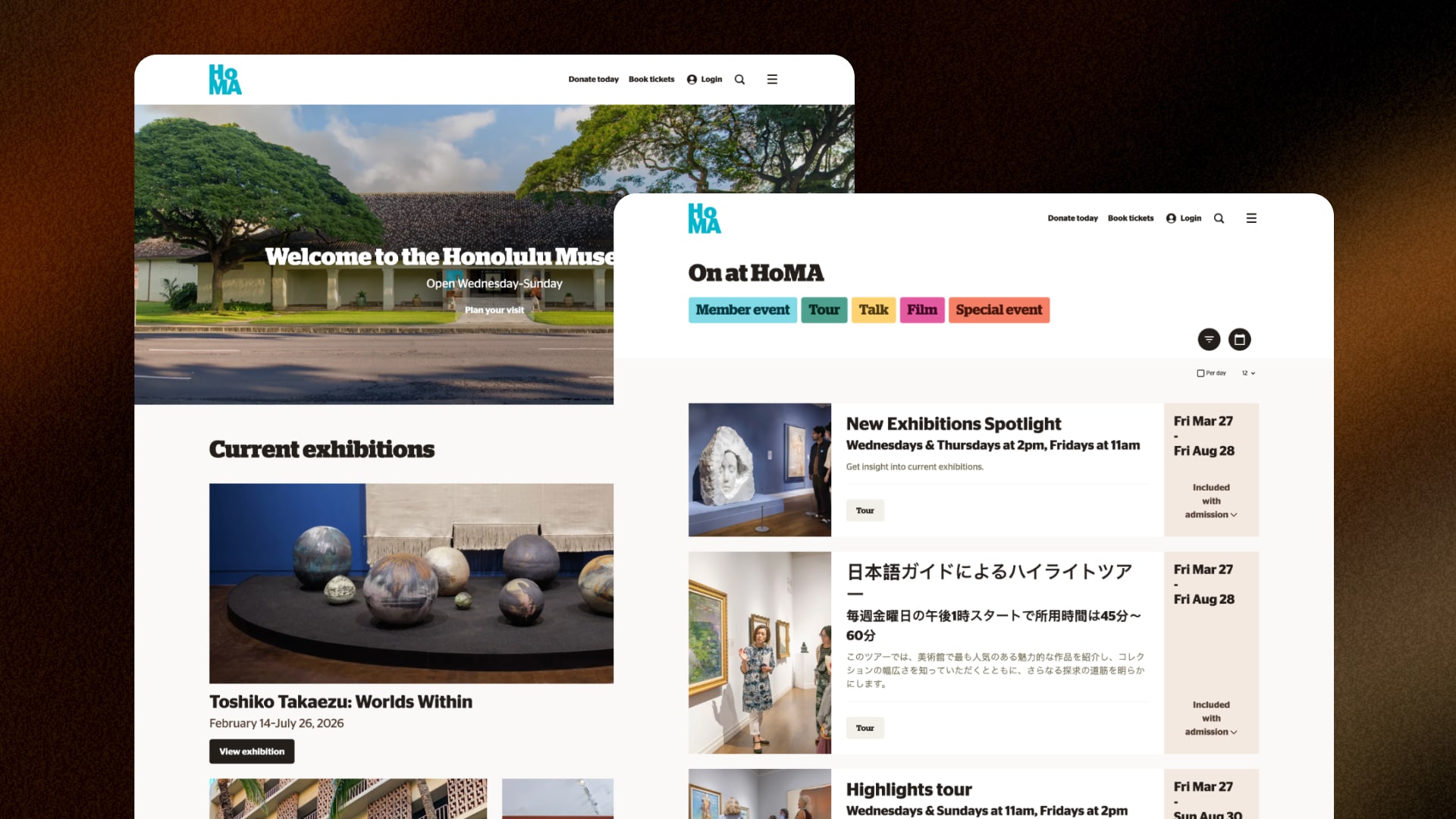
The "What's On" section was rebuilt from the ground up. Daily events and long-running exhibitions now sit together in a cohesive, visual format, giving visitors a clear picture of everything available and encouraging them to make a full day of it. HoMA staff can add marketing copy and control publication timing without workarounds.
For a museum like HoMA, the ability to build rich editorial worlds around its exhibitions is transformative. Take the exhibition Toshiko Takaezu: Worlds Within. The page doesn't just present the show. It brings together related programs, classes, and stories, giving visitors a complete picture of everything HoMA offers around a single artist or theme. This is what content connection looks like in practice: not siloed sections for exhibitions, classes, and blogs, but a single, coherent experience built around what a visitor is actually interested in.

Educational programmes and art classes – a substantial part of what makes HoMA distinctive – previously took multiple clicks to access. Using our Courses module, we created a dedicated, filterable section with clear age categorisation and day-by-day availability. What had been a source of frustration became one of the site's clearest journeys.
We eliminated standalone FAQ pages. Instead, contextual information sits exactly where people need it. Ticketing details on event pages. Membership information within the membership section. The principle: answer the question before it gets asked.
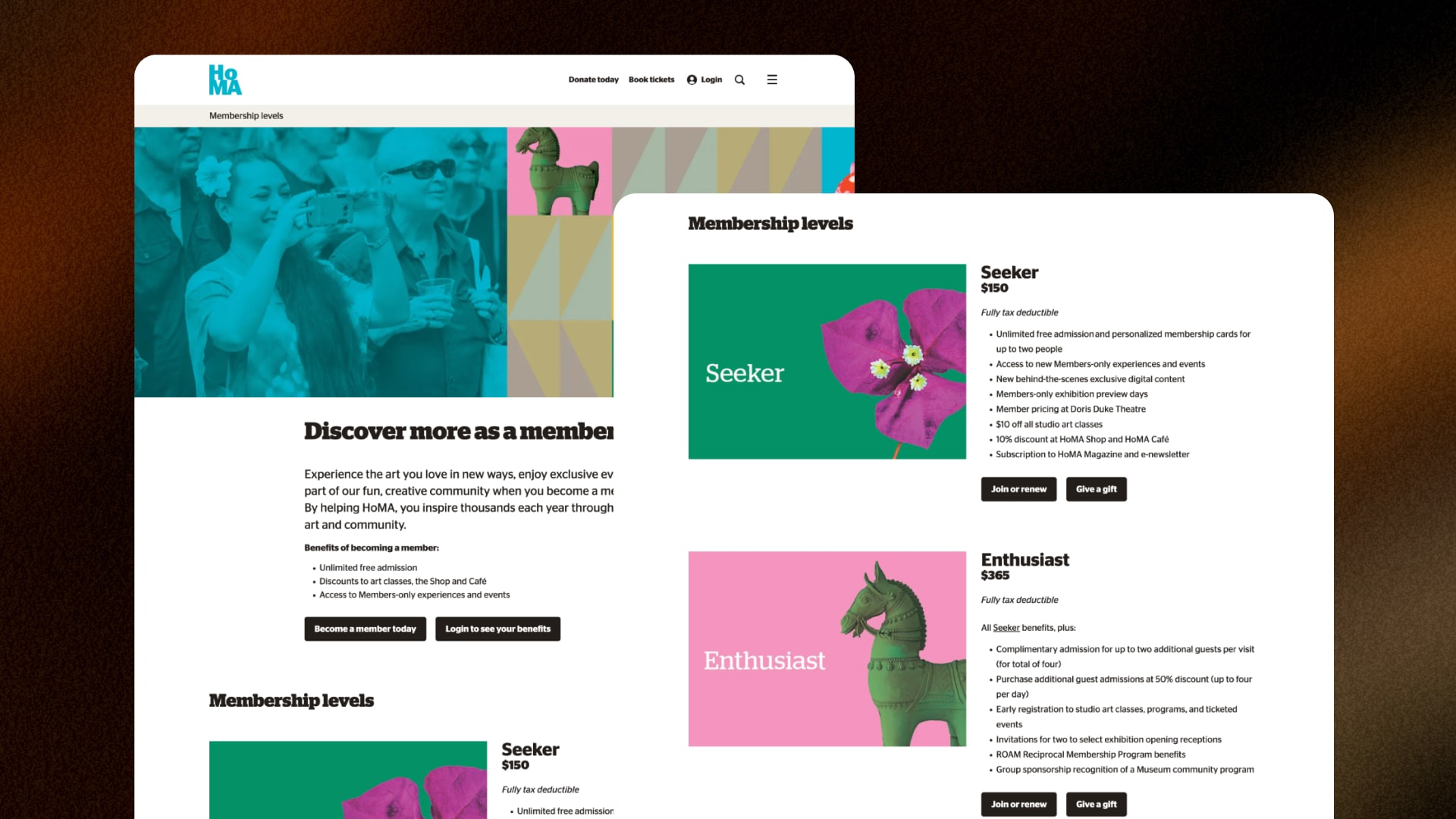
The membership work deserves particular mention. The rebuild coincided with HoMA re-envisioning its membership structure – and personalisation was central to making that vision real. Functionality is now in place for a public launch in Q4 2026 for a dedicated member area powered by SSO integration with Tessitura, with the capability to tailor content to each membership level. This lays the groundwork to move membership from a transactional relationship to something that reflects genuine access and belonging.
Underpinning all of this is CultureSuite's platform, with full Tessitura TNEW integration – removing the manual data entry and duplication that had been generating errors, and ensuring every 'Book Now' button routes directly to the correct event page.
The result
HoMA's new site treats the museum the way its audiences see it: as one world-class destination, not a collection of departments sharing a URL. The features that had long been on the wish list – personalisation, courses, rich content connections – are now live and improving with every platform update.
That's the difference a sector-specific website platform makes. Not just a better website at launch, but a foundation that keeps getting better without the need for another rebuild.
"Gone are the days of endless tickets and Zoom calls to address issues, along with lost revenue due to the website being down," says Sarah Smith. "Our website now functions smoothly, and remains user friendly while being flexible in meeting the Museum's needs."
Ready to curate something better?
HoMA's story starts with a relationship and a willingness to look honestly at what wasn't working. If that sounds familiar, we'd love to talk. Or at the very least, keep you in the loop.
- See CultureSuite CMS in action
Book a personalised demo to see how CultureSuite builds websites from the ground up. - Keep exploring
Dive into more thinking on digital strategy through our articles, events and webinars, Spotify, YouTube channel or our newsletter.